












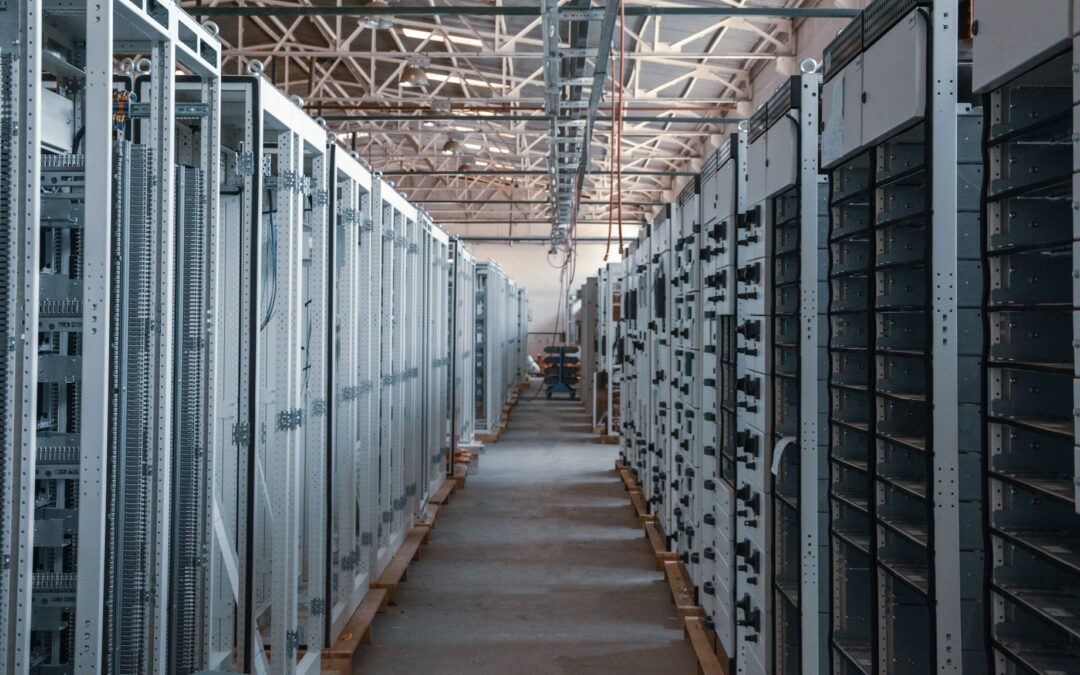
Photo: İsmail Enes Ayhan / Unsplash
The 2026 midterms were supposed to be about the economy, and in a sense they were. But one of the loudest economic arguments on the ballot this month was about a building most voters will never set foot in: the AI data center. According to Associated Press reporting published after Election Day, voters across the country rewarded candidates who promised to rein in the server farms that power chatbots, image generators and cloud apps, and they approved local limits on data centers in nearly every referendum where the question was asked. For anyone who uses AI tools at home or runs a business on them, that shift is worth understanding now, before it shows up in prices, product launches and the fine print of the services you rely on.
What happened at the ballot box
Data centers became a campaign issue on a scale few expected. AP, citing figures from the ad-tracking firm AdImpact, reported that campaigns spent more than $380 million on television ads that mentioned data centers, with Democrats outspending Republicans by better than three to one on that message. The results suggest the message landed.
- Congress and statehouses: Democrats won control of Congress, flipped at least five governorships and took full control of state government in Wisconsin, Minnesota, Pennsylvania, Nevada and Michigan.
- Texas: Democrat Gina Hinojosa defeated Republican Gov. Greg Abbott, who had promoted Texas as a center of AI development. Hinojosa has said she would block data center permits that are not a good deal for Texans or that residents had no voice in. Clayton Tucker, the first Democrat elected Texas agriculture commissioner since 1986, credited his pledge to fight data centers, which ranchers worried would strain scarce water.
- Ohio and Wisconsin: Ohio’s governor-elect, Dr. Amy Acton, has pledged to block projects that fail to meet certain standards. In Wisconsin, Gov.-elect David Crowley moved from opposing a moratorium to backing one, and called for ending the state’s sales tax exemption for data center developers.
- Local referendums: Redbud Consulting tracked 47 referendums in 44 municipalities across 12 states. Restrictions passed in 44 of the 45 contests where counting was complete. Ohio had 21 of those votes, Illinois seven and Kansas four. Maine, here in New England, had eight.
The trend reached beyond any single party. A review by Data Center Watch and 10a Labs, cited by AP, found that 32 of 34 winning governor candidates in races AP had called support stronger regulation or restrictions, and 12 support outright bans or moratoriums. AP VoterPoll found that roughly three in four voters nationwide oppose a new data center in their own community. Data centers were not the top issue for most people, though: about a quarter of voters called them crucial to their congressional vote, far fewer than those who pointed to corruption or the cost of living.
Why it matters to people who use AI apps
Every time you ask a chatbot a question, generate a photo, transcribe a meeting or let an app summarize your inbox, the work happens on racks of specialized computer chips somewhere. Those racks need land, electricity and, often, large amounts of water for cooling. The AI boom has depended on building them faster than ever. If states and towns make that harder, the effects ripple outward to the apps on your phone.
Here is the chain to keep in mind. Fewer approvals or slower approvals mean less new computing capacity. Less capacity, at a time when demand for AI keeps rising, can mean tighter usage limits, slower rollouts of new features, or higher prices for heavy users and businesses. It can also push companies to build in places with looser rules, including overseas, which raises questions about where your data is processed.
None of that is guaranteed. Companies may get more efficient, negotiate better deals with communities, or shift work to regions that still welcome them. Morgan Stanley, in analysis cited by AP, suggested the country could split into areas that are open to data centers and areas that are closed. The firm described Hinojosa’s win as the “most important election result” for data center development, which tells you how much the industry has riding on Texas. Real estate firm JLL has projected Texas will pass northern Virginia as the world’s largest data center market by 2030.
How we got here
For most of the last decade, data centers were quiet neighbors. They brought construction jobs and property tax revenue, and many states offered tax breaks to lure them. The generative AI wave changed the math. Training and running large AI systems takes far more power than ordinary cloud storage, and the newest campuses are enormous.
As those projects multiplied, residents began connecting them to things they could feel: rising electricity bills, worries about groundwater, the hum of cooling equipment, and tax deals negotiated with little public input. AP has reported for months on that skepticism, and on how it merged with the broader affordability message many candidates ran on this year. The industry has pushed back. The Data Center Coalition, through spokesperson Dan Diorio, told AP it expects newly elected officials to pursue moratoriums and warned that communities could lose tax revenue and other payments if projects go elsewhere. OpenAI, for its part, published a framework of new community commitments and urged policymakers to write clear rules.
Washington adds another layer. AP noted that President Donald Trump, described as the industry’s biggest champion, may stand in the way of any federal crackdown, which means much of the action will happen in state capitals, county boards and town meetings.
A practical checklist for households and small businesses
You do not need to follow every zoning hearing to protect yourself. A few habits will keep you ahead of whatever changes come.
If you use AI tools personally
- Know what you pay for. List the AI subscriptions in your app store account and on your credit card. Note renewal dates and whether the price is locked.
- Watch for plan changes. Companies usually announce new limits or price tiers by email or in-app notices. Read them instead of swiping them away.
- Keep a backup option. If one assistant becomes pricier or slower, it helps to know a second tool that can do the same job.
- Check your power bill. Utility rates are set through public proceedings. If your provider is seeking an increase, the filing will often say what is driving it.
If your business depends on cloud or AI services
- Read the price-change clause. Many software agreements let the vendor change prices with notice. Know how much notice you get and whether you can exit.
- Ask about capacity and location. Questions worth sending your vendor: Where is our data processed? Do you expect usage limits or price changes next year? What happens to service if a planned facility is delayed?
- Avoid single points of failure. If a chatbot answers your customers or an AI tool writes your product listings, document a fallback process you can switch to quickly.
- Budget for change. Build a cushion into next year’s software budget instead of assuming today’s AI prices will hold.
If a data center is proposed near you
- Find the planning or zoning agenda and read the application, not just the headlines.
- Ask how much electricity and water the project will use, who pays for grid upgrades, and what tax incentives are on the table.
- Ask whether there is a written community benefit agreement and how it would be enforced.
- Show up or submit written comments. Local votes this month showed residents have real influence.
What to watch next
The new governors and legislatures take office in the coming weeks and months, and several have already signaled what they want: moratoriums, more disclosure of water and energy use, a requirement for community support before projects move forward, and protections that keep homeowners and taxpayers from covering a project’s energy costs. Wisconsin’s debate over its sales tax exemption will be an early test.
Markets are watching too. AP reported that the tech-heavy Nasdaq slid 11% below its all-time high on Thursday after the election, as investors worried that rising borrowing costs and new restrictions could slow construction. Because building AI data centers has been one of the engines of U.S. economic growth, a slowdown would reach well beyond the tech sector.
Finally, watch the companies. Expect more pledges about water recycling, local hiring, on-site power and payments to host towns, as builders try to win back public trust. Whether those promises are specific and enforceable will matter more than how they sound in a press release.
The bottom line
The AI tools in your pocket feel weightless, but they run on very physical infrastructure, and voters just made clear they want a say in where it goes and who pays for it. That is not the end of the AI buildout, but it does mark the end of the era when it could happen quietly. The smartest move for everyday users and small businesses is simple: know what you depend on, read the notices, keep a backup, and take part in the local decisions that will shape the next wave of digital life.
Source: The Associated Press. Original AP report republished by PBS NewsHour.
Quick check
How much did you catch? Tap a question to see the answer.
1. In how many of the 45 completed local data center referendums tracked by Redbud Consulting did restrictions pass?
Answer: 44 of 45. Maine, in New England, held eight of the votes.
2. Roughly what share of voters told AP VoterPoll they oppose a new data center in their own community?
Answer: About three in four voters.
3. What is one question a small business should ask its AI or cloud vendor after these elections?
Answer: Good examples: where its data is processed, whether usage limits or price changes are expected, and what happens to service if a planned facility is delayed.